

Chimney Leaks: The #1 Problem Homeowners Ignore (And How to Fix It Right)
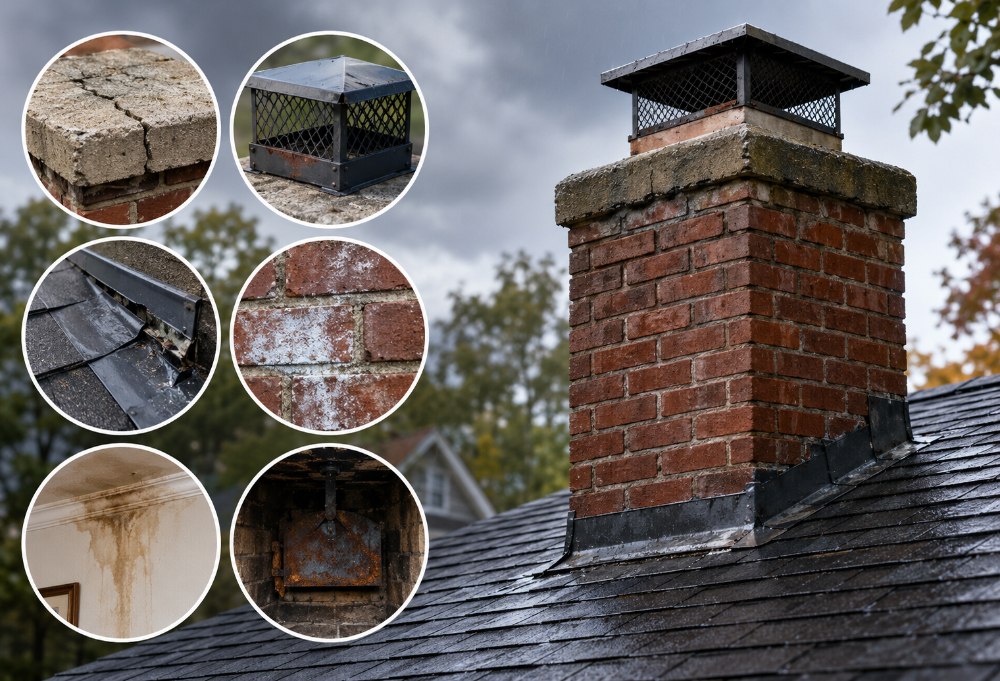
If there’s one issue we see more than anything else, it’s chimney leaks. Homeowners spend thousands of dollars renovating kitchens and bathrooms, upgrading appliances, and improving curb appeal, yet the chimney sitting right above their roofline gets completely overlooked. It’s one of the most common and costly mistakes in home maintenance, and it almost always starts small before it becomes a serious problem.
And here’s the truth: water is your chimney’s worst enemy.
Why Chimneys Are So Vulnerable to Water
Most people think of a chimney as a solid, durable structure. It looks sturdy from the outside, and for good reason: it’s built from brick, mortar, and stone. But that tough exterior hides a structure that is constantly under attack from the elements.
Your chimney sits above your roofline, exposed to rain, wind, temperature changes, and sun exposure every single day of the year. Unlike the rest of your home, which benefits from siding, roofing materials, and protective overhangs, your chimney stands alone. It takes the full force of every storm, every freeze-thaw cycle, and every season without much protection at all.
Over time, even a well-built chimney starts to break down if it’s not properly sealed and maintained. The mortar joints crack. The crown develops hairline fractures. The flashing separates from the roofline. And once any of those entry points open up, water finds its way in.
The Most Common Causes of Chimney Leaks
We see the same problems again and again when it comes to chimney leak repair, and understanding them is the first step toward fixing things the right way.
A cracked chimney crown is one of the biggest culprits. The crown is the concrete or mortar cap that sits at the very top of your chimney, sealing the space between the flue liner and the outer edge. When it cracks, rainwater runs straight down into the chimney structure.
Missing or damaged chimney caps are another frequent offender. The cap sits over the flue opening and keeps rain, debris, and animals out. Without one, your chimney is essentially an open hole in your roof.
Failed flashing at the roofline is responsible for a huge number of water intrusion calls. Flashing is the metal seal that connects your chimney to your roof, and when it pulls away or corrodes, water pours in right where the two surfaces meet.
Porous brick absorbing water is a subtler issue, but just as damaging. Brick looks solid, but it’s actually highly absorbent. Without a proper waterproof sealant applied to the masonry, bricks soak up moisture with every rainfall.
Finally, an open flue with no protection invites not just water but also animals, leaves, and debris that can block airflow and create fire hazards.
It doesn’t take much. Just a small crack can let water in, and once it’s in, it spreads.
Signs You Might Have a Leak
One of the trickiest parts of leaking chimney repair is that the damage isn’t always obvious right away. By the time you notice something, the water has often already been working its way through your chimney for months.
Water stains on walls or ceilings near the fireplace are a clear warning sign. So is a musty smell coming from the firebox, which usually indicates mold or mildew growing somewhere inside the system. Rust on the damper or firebox components tells you moisture has been sitting inside the chimney long enough to cause metal corrosion. Dripping sounds after rain are impossible to ignore once they start. And white staining on the brick, known as efflorescence, is a visible sign that water is moving through the masonry and pulling minerals to the surface.
A lot of homeowners ignore these early signs, thinking it’s minor. It’s not.
What Happens If You Don’t Fix It
Water damage builds slowly, but it hits hard. When chimney leaks go unaddressed, the consequences stack up quickly.
The flue liner, which is designed to contain heat and combustion gases safely, deteriorates when exposed to moisture over time. A damaged flue liner is not just a structural problem; it’s a safety hazard. Firebox damage follows, as repeated moisture exposure breaks down the firebrick and mortar inside. Mold growth becomes a serious concern, especially in the walls and ceiling areas surrounding the fireplace. Structural weakening of the chimney can eventually make it unstable. Interior drywall damage often extends far beyond the fireplace itself, spreading to adjacent rooms.
What could have been a $250 seal job turns into a $5,000 or more rebuild. That math is hard to ignore.
How We Fix Chimney Leaks the Right Way
There’s no one-size-fits-all solution when it comes to chimney leak repair. Every chimney is different, and a proper diagnosis needs to come before any repairs begin. That said, a thorough repair usually includes a combination of the following approaches.
Crown sealing or rebuilding addresses cracks or deterioration at the top of the chimney. Installing a stainless steel chimney cap closes off the flue opening and protects against rain and debris. Repairing flashing restores the waterproof seal between the chimney and the roof surface. Applying waterproofing to masonry creates a breathable barrier that repels water without trapping moisture inside the brick. Sealing cracks and joints throughout the chimney structure closes off any remaining entry points.
Done right, these repairs can add years, sometimes decades, to the life of your chimney.
Prevention Is the Old-School Way
The best approach is still the simplest. Annual inspections catch small problems before they become expensive ones. Sealing small cracks early, before they widen through freeze-thaw cycles, is far cheaper than waiting. Keeping a proper chimney cap installed year-round is basic but essential protection. Addressing issues before winter means you’re not scrambling to schedule repairs when every chimney professional in the area is fully booked.
It’s the kind of routine maintenance that keeps bigger problems off your plate.
Local Experience Matters
Not every chimney faces the same conditions. Coastal homes in Ventura and Santa Barbara deal with salt air and moisture that accelerate corrosion and deterioration in ways that inland homes simply don’t experience. Inland areas, on the other hand, see more dramatic temperature swings between seasons, which puts extra stress on mortar joints and crowns as materials expand and contract repeatedly.
Different environments, but the same principle: keep water out.
A chimney contractor with local experience understands these regional differences and knows how to choose the right materials and sealing methods for your specific climate. Generic solutions don’t always hold up in areas with unique weather conditions, which is why working with someone who knows your area matters more than most homeowners realize.
Conclusion
Chimney leaks rarely announce themselves loudly. They work quietly, slowly, and expensively behind walls and inside masonry until the damage is impossible to ignore. If you’ve noticed any signs of a leak, or just want peace of mind, it’s worth having it looked at before the next rain hits. A small investment in chimney leak repair today is almost always far less painful than the leaking chimney repair bill waiting on the other side of a neglected problem.
Need Chimney Caps & Full-Service Chimney Care Near You?
Keep your home safe and cozy with our expert team at The Chimney Cleaner Inc.! From professional chimney cleaning and detailed inspections to fireplace restorations and custom mantles, we’re dedicated to ensuring your chimney and fireplace work safely and efficiently. Whether you need reliable sweeping, gas line installation, or chimney stack remodeling, we’ve got you covered throughout Ventura County and beyond. Give us a call today; we’re ready to help you enjoy the warmth and peace of mind you deserve!